

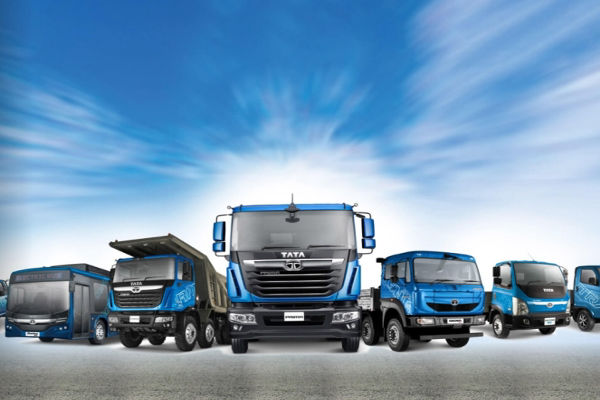
Tata Motors commercial vehicle sales reached 42,508 units in December 2025, up from 33,875 units in December 2024, registering a 25% year-on-year growth. In comparison, November sales stood at 35,539 units, a 29% rise over the 27,636 units sold in November 2024. December figures also marked a 19.6% increase compared to the previous month.
For the third quarter of fiscal 2026 (October–December), the company reported sales of 1,15,577 units, up 21% from 95,770 units in the same period last year, and showing a 22% sequential increase over Q2FY26.
Segment Performance
Heavy Commercial Vehicle (HCV) trucks drove December sales, reaching 12,483 units, up 31% from 9,520 units in December 2024. In November, HCV truck sales stood at 10,181 units. For the third quarter of FY26, HCV trucks totaled 33,401 units, marking a 23% increase over 27,130 units sold in Q3FY25.
Small Commercial Vehicle (SCV) cargo and pickup sales reached 15,448 units in December, up 19% from 13,018 units in December 2024. In November, SCV sales had stood at 13,327 units. For the quarter, SCV sales totaled 43,793 units, compared to 38,232 units in the same period last year, reflecting 15% growth.
Passenger carrier sales remained largely steady, with 4,167 units sold in December 2025, slightly higher than 4,144 units in December 2024. November sales had recorded 3,340 passenger carrier units.
Domestic and Global Markets
Domestic commercial vehicle sales in December reached 40,057 units, up 24% from 32,369 units in December 2024. November domestic sales had stood at 32,753 units, reflecting a 25% year-on-year growth.
International business sales rose to 2,451 units in December, compared to 1,506 units in December 2024, marking a 63% increase. This followed November’s international sales of 2,786 units, which had recorded 92% year-on-year growth.
For the third quarter of FY26, domestic sales totaled 1,07,918 units, up 18% from 91,260 units in Q3FY25. International business contributed 7,659 units in Q3FY26, a 70% increase from 4,510 units in the same quarter last year.
Market Outlook
Girish Wagh, Managing Director and CEO of Tata Motors, attributed the strong performance to continued momentum from the GST 2.0 rollout and festive season demand. He highlighted a rebound in construction and mining activities following an extended monsoon, along with steady demand from core sectors and the auto logistics segment.
Looking ahead, the company expects demand to strengthen across most commercial vehicle segments in Q4FY26. Wagh identified government infrastructure initiatives and growth in end-use sectors as key drivers for 2026. Tata Motors plans to leverage product portfolio optimization, pricing strategies, and targeted market activations to sustain its growth momentum.