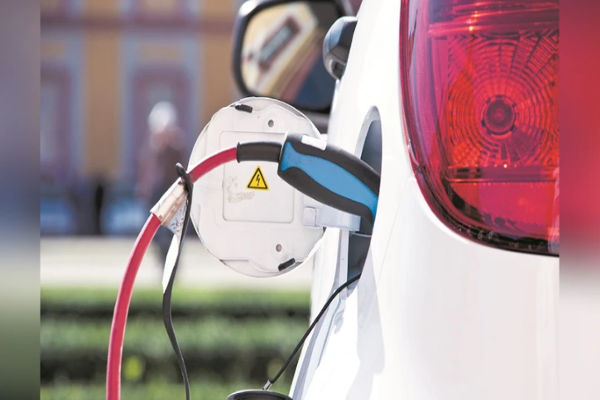


Union Road Transport and Highways Minister Nitin Gadkari announced on Monday (October 6, 2025) that electric vehicle (EV) prices in India are likely to reach parity with petrol-powered vehicles within the next four to six months.
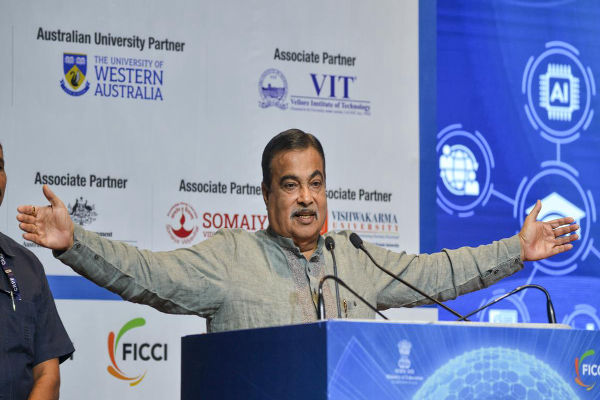
The Minister highlighted that India’s heavy reliance on fossil fuels poses a dual challenge — an economic strain, with ₹22 lakh crore spent annually on fuel imports, and a significant environmental threat. Emphasizing the need for a transition to clean energy, Mr. Gadkari stated, “Within the next 4-6 months, the cost of electric vehicles will be on par with petrol vehicles,” during his address at the 20th FICCI Higher Education Summit 2025.
Union Road Transport and Highways Minister Nitin Gadkari on Monday (October 6, 2025) said that the prices of electric vehicles (EVs) in India are expected to reach parity with petrol-powered vehicles within the next four to six months.
The Minister highlighted that India’s dependence on fossil fuels poses both an economic and environmental challenge, noting that ₹22 lakh crore is spent annually on fuel imports. He emphasized that adopting clean energy is crucial for the country’s sustainable progress.
“Within the next 4-6 months, the cost of electric vehicles will be equivalent to the cost of petrol vehicles,” Mr. Gadkari said while addressing the 20th FICCI Higher Education Summit 2025.
Further, the Minister added, “Within five years, our target is to make India’s automobile industry the number one in the world.”
“When I took charge as Transport Minister, the size of the Indian automobile industry was ₹14 lakh crore. The size of the Indian automobile industry now is ₹22 lakh crore,” Mr. Gadkari noted.
Currently, the size of the U.S. automobile industry stands at ₹78 lakh crore, followed by China at ₹47 lakh crore, and India at ₹22 lakh crore.
Mr. Gadkari pointed out that farmers have earned an additional ₹45,000 crore by producing ethanol from corn.
Furthermore, the Minister said, “We have initiated a programme under which we aim to use the entire segregated solid waste in the country in road construction by 2027, thereby creating value from the waste.”
Highlighting the importance of higher education and skill development, the Minister added that a futuristic vision for development with appropriate knowledge is the need of the hour. He emphasized that India’s strength lies in its young, talented, and skilled manpower, which gives the nation a competitive edge over others.
This is a big strength of India, and by using this strength, if we are successful in giving them the right education and right skills, then we can move ahead in the world,” he said.
Additionally, the Minister stated that higher education institutions should also focus on including and adopting successful innovative technologies in their curriculum, along with practical applications to strengthen future planning.