

Force Motors Limited posted strong domestic wholesale growth in November and December 2025. The company’s sales surged 59% year-on-year in November, followed by a 49% increase in December.
In November 2025, Force Motors sold 2,765 units domestically, up from 1,736 units in November 2024. December saw sales climb to 2,952 units, compared with 1,985 units a year earlier. These back-to-back monthly gains reflect continued strength in the company’s key business segments.
Quarterly & Year-to-Date Performance Overview
The company’s domestic wholesale volumes in the third quarter rose 47%, climbing from 5,723 units to 8,427 units.
From April to December 2025, domestic sales reached 24,920 units, a 25% increase compared to 19,911 units in the same period of 2024.
This quarter-on-quarter growth reflects strengthening demand across the company’s product portfolio, with December recording the strongest monthly performance of the quarter.
Market Trends
Prasan Firodia, Managing Director of Force Motors Limited, attributed the strong performance to a revival in the tour and travel segment, driven by higher intercity movement and renewed fleet expansion. He also highlighted that school transportation demand remained stable during the holiday season, signaling continued institutional confidence as 2026 approaches.
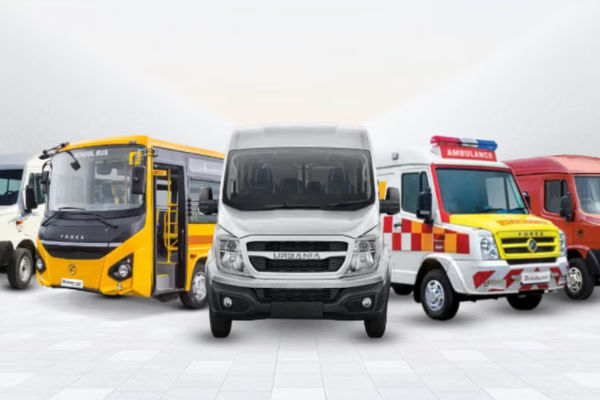
The company has seen a broad-based increase in demand across its product lineup. The Urbania platform is gaining momentum in both urban and emerging markets, carving out a position in what Force Motors describes as the premium shared mobility segment. Meanwhile, the Traveller range continues to hold a strong market presence.
Product Performance and Market Dynamics
The company’s strong performance has been driven by its Urbania and Trax platforms. The Trax range, in particular, has gained from GST adjustments on rural mobility vehicles, which have made them more affordable and boosted replacement demand in rural and semi-urban markets.
This policy change has notably influenced sales in areas where commercial vehicle replacement had previously been delayed due to pricing pressures. The enhanced affordability has prompted fleet operators to modernize and upgrade older vehicles.
The Traveller platform has continued to deliver consistent volumes, showing steady year-to-date growth. Meanwhile, the Monobus has seen rising demand, driven largely by institutional buyers and state transport departments. The institutional segment has performed particularly well, with schools and government organizations expanding their transportation capacity.
Force Motors has phased out production of three-wheelers and tractors, focusing its operations on van and utility vehicle segments where it maintains strong market leadership.
Export Performance and Total Volumes
In November, total wholesale volumes, factoring in exports, rose by 53% to reach 2,883 units. However, export shipments fell by 21% to 118 units during the same month, a decline the company attributed to shifts in international shipping schedules. The company has not released December export numbers in its latest update.
While the company continues to serve markets in the Middle East, Gulf region, Asia, Latin America, and Africa, international sales still make up a relatively small share of its total business compared to domestic sales.
Supportive policies, including GST adjustments, alongside a rebound in the tourism and travel sector and consistent institutional demand, have created a positive environment for the company’s product lineup. According to the company, these trends set the stage for sustained performance in 2026, with strong customer confidence evident across its key platforms.