


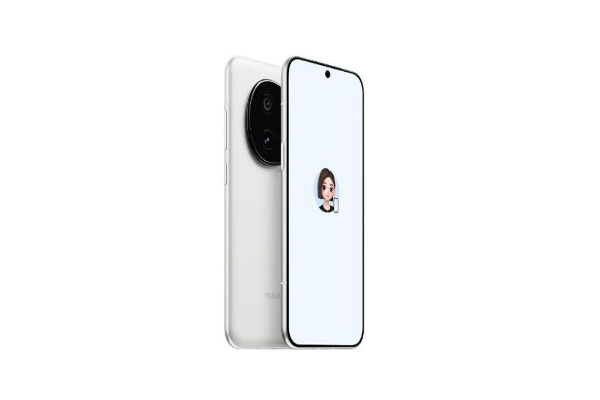
On December 2, ByteDance unveiled a prototype agentic AI smartphone developed with ZTE, generating instant consumer excitement – and equally swift privacy concerns that led the company to scale back certain features. Beyond the media buzz and sell-out hype, a deeper narrative is emerging: the enterprise potential of AI agents embedded at the operating-system level, capable of autonomously performing complex, multi-step tasks across interconnected device ecosystems.
The ZTE Nubia M153, driven by ByteDance’s Doubao large language model, serves not only as a consumer-focused experiment but also as a glimpse into how agentic AI smartphones could transform workplace productivity, field operations, and enterprise mobility strategies provided the technology addresses the critical trust and governance challenges required for enterprise adoption.
Agentic AI Smartphones: From Consumer Gadgets to Enterprise Game-Changers
The consumer allure is clear voice-driven restaurant reservations, automatic photo enhancements, and cross-platform price comparisons. Yet the enterprise opportunity is even more significant: Gartner forecasts that by 2028, one-third of all enterprise software applications will integrate agentic AI capabilities, up from under 1% in 2024.
As the most ubiquitous computing device in enterprise workflows, the smartphone is emerging as a crucial testing ground for agentic AI. “In sectors like manufacturing, construction, healthcare, and energy, agentic AI will improve decision-making, enhance safety, and streamline operations,” says Nicholas Muy, CISO of Scrut Automation. He adds a note of caution, emphasizing that early adopters must carefully manage risks related to AI errors and potential security vulnerabilities.
According to McKinsey, 23% of organizations are scaling agentic AI systems in at least one business function, while another 39% are experimenting with AI agents. Yet enterprise adoption presents unique challenges compared to consumer use: it requires robust governance frameworks, audit trails, role-based permissions, and compliance mechanisms features that ByteDance’s consumer-oriented prototype notably lacks.
China’s Edge in Integrating Software and Hardware
ByteDance’s strategy of partnering with ZTE instead of developing proprietary hardware reflects a proven approach in enterprise AI. By positioning Doubao as a system-level platform that any manufacturer can integrate, the company is following a model similar to Google’s Android, enabling broader adoption and ecosystem growth.
As of August 2025, Doubao boasts 157 million monthly active users, according to QuestMobile, giving it a commanding lead in China’s consumer AI market more than double Tencent’s Yuanbao, which has 73 million users.
The software-over-hardware strategy tackles a key challenge highlighted by Morgan Stanley analysts: leading smartphone makers like Apple, Huawei, and Xiaomi have the technological capability to develop AI assistants in-house, reducing their reliance on third-party solutions.
ByteDance seems to be focusing on second-tier manufacturers and enterprise device management platforms that are looking for differentiated AI capabilities. For enterprise buyers, this fragmented landscape offers both opportunities and challenges.
Organizations could choose device manufacturers based on specific hardware needs while standardizing on AI capabilities provided that governance and security frameworks are strong enough to meet the demands of regulated industries.
Privacy Concerns Highlight Enterprise Requirements
The rapid backlash after entrepreneur Taylor Ogan’s viral social media demos of the M153 highlighted the requirements for enterprise adoption. As users saw an AI agent with deep system privileges autonomously accessing apps, processing payments, and handling data, the primary concern shifted from convenience to control.
A Forum Ventures survey of 100 senior enterprise IT decision-makers found that trust remains the biggest barrier to adoption. “The trust gap is enormous,” says Jonah Midanik, General Partner at Forum Ventures. “AI agents can execute tasks with impressive efficiency, but their outputs are grounded in statistical probabilities, not absolute truths.
ByteDance’s decision to scale back certain capabilities reflects an awareness that enterprise-grade agentic AI smartphones demand granular permission controls, detailed logging, and clearly defined operational boundaries features that were largely missing from the consumer prototype.
Enterprise vs. consumer: Different use cases, different requirements
Enterprise applications for agentic AI smartphones differ significantly from consumer uses. Field service technicians could rely on AI agents to surface equipment histories, suggest optimal routes based on real-time conditions, and guide complex procedures without manual searches. Healthcare providers might access patient context and decision support seamlessly across systems, while financial services professionals could benefit from compliance-verified recommendations and automated workflow orchestration.
PwC research shows that 79% of organizations have adopted AI agents in some capacity, with 96% of IT leaders planning further expansions in 2025. Yet, a Cloudera survey of 1,484 IT decision-makers highlights that successful enterprise deployment hinges on industry-specific data integration, transparent decision-making processes, and phased rollouts supported by thorough testing.
IDC projects that 912 million generative AI-enabled smartphones will ship by 2028, highlighting consumer demand for personalization and convenience. In contrast, enterprise deployments focus on auditability, compliance, and risk management areas where consumer-oriented agentic AI smartphones still fall short.
Global Tech Competition Shapes Regional AI Smartphone Strategies
The US-China technology divide adds layers of complexity. Apple’s delayed rollout of Apple Intelligence in mainland China opened a window for ByteDance, Alibaba, Baidu, and Tencent to compete. Yet Apple’s strategy stands apart: its tight hardware-software integration and emphasis on on-device processing prioritize user privacy a principle closely aligned with enterprise security requirements.
ByteDance’s licensing strategy enables Doubao to achieve rapid adoption among Chinese manufacturers, potentially setting de facto standards before Western competitors can match its operating-system-level integration. For multinational enterprises, this raises challenges in device management, including data sovereignty, regulatory compliance, and maintaining consistent user experiences across regions.
Counterpoint Research indicates that the Asia-Pacific region is the fastest-growing market for AI agents, while the US currently accounts for 40.1% of revenue. Enterprise buyers face a split landscape, often needing to maintain distinct device strategies to comply with varying regulatory environments.
The path forward: Solutions over hype
For enterprise leaders assessing agentic AI smartphones, ByteDance’s prototype provides important lessons on vendor expectations:
First, robust governance frameworks are essential. These should clearly define decision boundaries, log all autonomous actions, and enforce role-based access controls. Anthropic’s enterprise solution, with its centralized provisioning, audit logs, and role-based permission management, serves as a practical example of how these requirements can be implemented.
Second, hybrid approaches that combine on-device processing for sensitive operations with cloud-based capabilities for complex reasoning are critical. Enterprise deployments need this flexibility to comply with varying data residency and regulatory requirements across jurisdictions.
Third, phased rollouts beginning with low-risk use cases help manage adoption safely. Amazon’s use of AI agents for Java application modernization demonstrates how enterprises can extract value while controlling potential risks.
The ByteDance-ZTE collaboration ultimately signals an inevitable trend: agentic AI capabilities are set to become standard smartphone features rather than premium differentiators. Enterprise adoption is likely to follow established patterns pilot programs in controlled environments, thorough security validation, and gradual scaling as governance frameworks mature.
The pressing question for enterprise technology leaders isn’t whether agentic AI smartphones will impact workplace productivity, but whether organisations will shape deployment strategies proactively or simply adapt to consumer technologies retrofitted with enterprise features. The privacy backlash following ByteDance’s launch underscores that companies insisting on enterprise-grade security and governance from the outset will likely define the technology’s trajectory.
Gartner projects that by 2028, at least 15% of work-related decisions will be made autonomously by agentic AI, up from virtually none in 2024. In this context, the smartphone evolves from a simple communication tool into an autonomous enterprise agent. Success will favor not the fastest deployers, but those who implement thoughtfully embedding security and scalable governance from day one.