


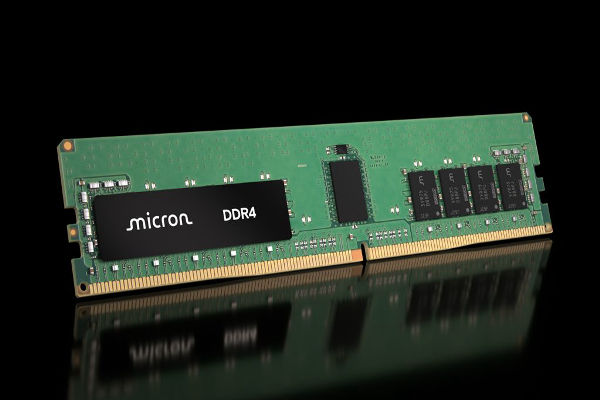
In 1978, four engineers started what would grow to be one of the largest semiconductor companies in America in the basement of a dental clinic in Boise, Idaho. Micron Technology was founded as a small design firm by Ward Parkinson, Joe Parkinson, Dennis Wilson, and Doug Pitman with support from local investors, notably potato tycoon J.R. Simplot.
They produced chips that were about half the size of Japan’s top products by 1983, marking a technological breakthrough. That same corporation has taken a decision that exemplifies the tremendous influence of artificial intelligence on hardware economics nearly fifty years later: manufacturers are being forced to quit entire market segments due to AI memory hunger.
Micron declared on December 3, 2025, that it would withdraw from the consumer memory business entirely and discontinue its 29-year-old Crucial brand by February 2026. “The demand for memory and storage has increased due to the AI-driven growth in the data center,” stated Sumit Sadana, executive vice president and chief business officer of Micron.
In order to improve supply and support for our larger, strategic customers in faster-growing segments, Micron has made the difficult decision to exit the Crucial consumer business.
Translation: Micron’s fabrication capability cannot serve both markets concurrently, and data centers with AI workloads will pay significantly more for memory than individual customers ever could.
The announcement is a financial decision as well as a turning point that shows how global semiconductor supply chains are being restructured by AI memory hunger demands, compelling manufacturers to make difficult decisions about which customers “deserve” access to limited production capacity.
The economics of AI memory hungry
Micron’s decision to withdraw is a reflection of the state of the economy. With a roughly 20% global market share, the business is the third-largest DRAM manufacturer in the world, positioned between South Korean behemoths SK Hynix (35%) and Samsung Electronics (43%). Together, these three account for over 95% of global DRAM production; this oligopoly is currently dealing with unheard-of demand from developers of AI infrastructure.
The story is revealed by the margin differentials. With extremely low profitability, consumer RAM modules compete in erratic retail markets. Enterprise contracts offer significantly higher average selling prices, multi-year commitments, and consistent demand for DDR5 modules for data center servers and high-bandwidth memory (HBM) used in AI accelerators.
Each fabrication wafer dedicated to consumer goods implies lost revenue from higher-value enterprise contracts for memory makers; this opportunity cost has become economically unjustifiable as demand for AI rises.
The shift’s magnitude is demonstrated by the numbers. Data center and AI applications accounted for 56% of Micron’s record fiscal 2025 revenue of US$37.38 billion, an almost 50% year-over-year increase. According to reports, SK Hynix has sold out of all of its DRAM, HBM, and NAND production capacity for 2026.
Consumer memory prices have soared in response. DRAM spot prices climbed 172% year-over-year as of Q3 2025, while retail prices for 32GB DDR5 modules have surged 163–619% in global markets since September. Component suppliers now pay around US$13 for 16GB DDR5 chips that were just US$7 six weeks ago—an increase large enough to wipe out the entire gross margin for many third-party brands.
Consumer Market Reshapes Under Pressure from AI Memory Hunger
Micron’s exit is reshaping the consumer memory landscape. Third-party brands such as Corsair, G.Skill, Kingston, and ADATA all rely on the major DRAM manufacturers for their chips. With Micron now withdrawing entirely, these vendors are forced to compete more aggressively for limited allocations from Samsung and SK Hynix — both of which are prioritising high-bandwidth memory production for AI accelerators.
The resulting concentration introduces new vulnerabilities. Samsung and SK Hynix are now the only major suppliers serving both consumer and enterprise segments, and each faces the same capacity allocation pressures. If AI infrastructure investment continues on its current trajectory, additional manufacturers may scale back or restructure their consumer-focused operations.
Supply chain constraints are already materialising beyond DRAM. NAND flash wafer contract prices rose by more than 60% in November 2025. Graphics memory markets are under pressure as manufacturers transition to GDDR7 for next-generation GPUs, creating GDDR6 shortages that have pushed prices up by roughly 30%. Even hard drive manufacturers have raised prices by 5–10%, citing limited supply.
For consumers and small businesses, the implications extend beyond rising costs. Product availability may tighten further during peak demand periods. With fewer direct suppliers in the market, product differentiation could shrink, and competitive pricing dynamics that once favoured buyers may weaken significantly.
Industry-Wide Realignment Accelerates
Micron’s consumer exit marks a structural shift, not a temporary reallocation. Unlike previous waves of technological growth — personal computing, the internet era, and the rise of mobile devices — which drove memory demand steadily over decades, today’s AI infrastructure boom has compressed the cycle dramatically.
Hyperscale operators are committing hundreds of billions of dollars to data centre expansion within just a few years. The scale is evident in semiconductor markets: the data centre total addressable market reached US$209 billion in 2024 and is projected to approach US$500 billion by 2030, powered largely by AI and high-performance computing workloads.
GPU revenues alone are projected to grow from US$100 billion in 2024 to US$215 billion by 2030, with each accelerator requiring large allocations of high-bandwidth memory to reach full performance.
Memory architecture trends add further complexity. AI training workloads are shifting toward HBM3E modules due to their higher bandwidth and improved power efficiency, while inference workloads increasingly rely on DDR5 with stringent latency requirements.
Automotive systems adopting zonal architectures now require multi-gigabyte DRAM configurations, each tied to premium pricing and long-term supply contracts. These high-value applications are systematically redirecting manufacturing capacity away from traditional consumer markets.
The manufacturing response mirrors this shift in priorities. Samsung is accelerating its 1c DRAM roadmap and preparing for mass production of HBM4 in 2025, while fully phasing out DDR4. Micron, meanwhile, began mass-producing DRAM using Extreme Ultraviolet (EUV) lithography in 2025, signalling a deeper transition toward advanced, AI-centric memory technologies.
SK Hynix is channeling its development efforts into HBM and next-generation LPDDR technologies, aligning with the highest-growth segments of the market. Across all three major manufacturers, research priorities and capital investments are increasingly concentrated on applications that deliver stronger margins and long-term returns.
What this means for enterprise buyers
Enterprise procurement teams now face increasing pressure as memory markets undergo major restructuring. With memory accounting for 10–25% of BOM costs in typical servers and commercial PCs, a 20–30% rise in component pricing can push total system costs up by 5–10%, translating into millions in additional spend for large-scale buyers.
To navigate this volatility, organisations are turning to forward purchasing agreements, strengthening direct ties with manufacturers, and widening their supplier base. However, timing remains a critical uncertainty. Although new fabrication capacity is being built — backed by government incentives — these facilities take years before they become fully operational.
Critical questions ahead
Micron’s withdrawal from the consumer market raises a series of fundamental questions. Can Samsung and SK Hynix continue supporting their consumer product lines, or will rising capacity pressures trigger similar reductions? And if the consumer segment shifts toward third-party brands sourcing chips from suppliers increasingly focused on enterprise customers, what does that mean for innovation, pricing power, and overall market competitiveness?
With only two major manufacturers left supplying consumer memory, the market becomes far more fragile. Any disruption affecting Samsung or SK Hynix could have an outsized impact on global availability, driving shortages, delaying product launches, and intensifying price volatility.
The broader implications touch on technology accessibility. If memory prices stay high or consumer product availability remains limited, the cost of personal computing and small business infrastructure could rise, potentially widening digital divides.
Micron’s decision highlights how artificial intelligence is transforming not just software, but the core economics of hardware manufacturing. The retirement of the Crucial brand after 29 years marks the end of an era when memory manufacturers could profitably serve both consumer and enterprise markets simultaneously.
Across the broader technology ecosystem, the surge in demand for AI memory has emerged as the semiconductor industry’s primary growth driver, diverting resources in ways that fundamentally reshape which markets manufacturers prioritize.